
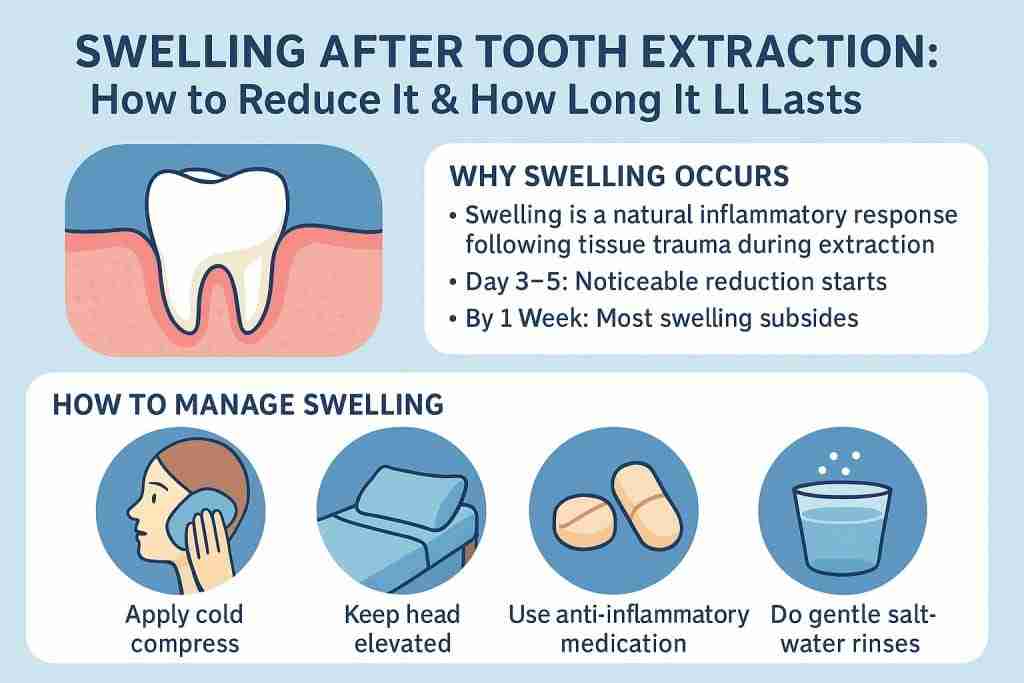
Experiencing swelling after tooth removal is common and can be uncomfortable. This swelling typically peaks 48 hours after the procedure but can last up to a week. Understanding how to manage it can help you recover smoothly. In this article, we’ll provide practical tips and remedies to minimise swelling after a tooth extraction and promote healing.
Key Takeaways
- Swelling after tooth extraction is a natural inflammatory response, peaking within 48 hours and lasting 5 to 7 days, and needs proper management to help healing.
- Immediate care, including the application of ice packs and good oral hygiene, is essential to control swelling, manage pain, and prevent complications during recovery.
- Recognising the signs of complications — such as prolonged swelling, fever, or increasing pain — is crucial for timely treatment and a smooth recovery.
Why Swelling Happens After Tooth Extraction
Swelling is a natural response of the body to the trauma caused by dental surgery, such as a tooth extraction or wisdom tooth removal. It is usually noticeable externally and can peak within 48 hours after the procedure. It’s a common side effect that can last between 5 to 7 days, with the most significant reduction typically occurring by the third day. However, complete healing can take anywhere from 1 to 2 weeks, depending on individual circumstances.
The primary cause of swelling after an extraction is the body’s inflammatory response to the surgical trauma. This response is part of the healing process, as the body sends more blood and nutrients to the affected area to promote repair. While this is a normal and expected reaction, it can be uncomfortable and may need managing so it doesn’t interfere with your daily activities or extend the healing period.
Good oral hygiene is vital during this healing phase to prevent infection, which can complicate and prolong swelling. Understanding the causes and duration of swelling helps you manage your expectations and care after an extraction.
Immediate Care Post-Extraction
Immediate care is key to managing swelling and promoting healing. After an extraction, control bleeding and swelling by applying dampened gauze pads or a moistened tea bag to the affected area for up to 30 minutes, which aids blood clot formation.
After tooth removal, consider the following care tips:
- Use cold compresses to reduce swelling in the first 24 hours.
- Avoid smoking and other tobacco products, as they can hinder healing and increase the risk of complications.
- Brush and rinse gently to help ensure a quick recovery, especially after wisdom tooth removal.
Pain, bleeding, and swelling are all normal after an extraction, and a few immediate steps can reduce discomfort and speed up healing. Next, we’ll discuss using ice packs effectively and managing pain and inflammation.
Using Ice Packs Effectively
One of the most effective ways to reduce swelling after a tooth extraction is to use ice packs. Applying cold compresses immediately after the procedure can help manage swelling and numb the pain. For the first 24 hours, it’s recommended to apply an ice pack wrapped in a clean cloth to the cheek for 20 minutes every hour. This constricts the blood vessels, reducing blood flow to the area and minimising swelling.
After the initial 24-hour period, switching to a warm compress can help manage swelling and promote healing, as the warmth encourages blood flow to the area in the later stages of recovery.
Consistency is crucial — regularly applying ice packs in the first 24 hours significantly helps manage swelling.
Managing Pain and Inflammation
For a comfortable recovery, managing pain and inflammation is essential. Over-the-counter medications like ibuprofen effectively reduce swelling and pain by tackling inflammation.
In some cases, your dentist may prescribe stronger painkillers or anti-inflammatory medication. These should be taken exactly as directed to ensure effective pain management and to avoid any potential side effects. Follow the prescribed dosage and frequency to get the most benefit and minimise the risk of delayed healing.
Along with medication, good oral hygiene and following your dentist’s care instructions will help reduce pain and inflammation. Avoiding smoking and alcohol is also vital for a smooth recovery.
Home Remedies to Reduce Swelling
Home remedies can be a great addition to your post-extraction care routine, providing natural ways to ease swelling and discomfort. One effective method is applying cold compresses to the swollen area, which helps minimise inflammation and numb the pain. Maintaining a healthy diet also plays a significant role in recovery, as proper nutrition can reduce inflammation and support the healing process.
Next, we’ll discuss specific home remedies in detail, including warm salt water rinses and the importance of eating soft foods to avoid irritation.
Warm Salt Water Rinses
Warm salt water rinses are a simple yet effective home remedy to reduce swelling and promote healing after a tooth extraction. The salt helps cleanse the extraction site, reducing the bacterial presence and the risk of infection. It’s important to rinse gently to avoid dislodging the blood clot, which is essential for healing.
To use a warm salt water rinse:
- Dissolve a teaspoon of salt in a cup of warm water.
- Swish gently for about 30 seconds.
- Spit out the water.
- Repeat several times a day, especially after meals, to keep the extraction site clean and reduce swelling.
Eating Soft Foods
Eating soft foods is crucial after a tooth extraction to avoid irritating the extraction site and to help healing. Soft foods like mashed potatoes, soups, and smoothies provide the nutrition you need without requiring hard chewing, which can disrupt the healing process. Avoiding hard foods reduces complications and keeps the extraction site undisturbed.
Recognising Complications
While swelling and discomfort are normal after a tooth extraction, it’s important to recognise the signs of potential complications. These include:
- Increasing pain or swelling
- Prolonged bleeding
- High fever
If you notice any of these symptoms, it’s crucial to contact your dentist immediately for further evaluation.
The most common complication after tooth extraction is a dry socket, which occurs when the blood clot at the extraction site dislodges or dissolves prematurely. This can cause severe pain and delay healing. Next, we’ll cover what to do if swelling persists and how to identify signs of infection.
When Swelling Persists
Consult your dentist if swelling worsens or persists beyond 1–2 weeks, as it may indicate a complication needing professional attention. Also contact your dentist if you feel sharp fragments or have any other concerns after your extraction. Prompt action can prevent complications and ensure a smoother recovery.
Signs of Infection
Infections after tooth extraction can present with various symptoms, including fever, tenderness at the extraction site, and a discharge of pus. Osteonecrosis of the jaw — a serious complication characterised by bone death — is a rare but potential risk. Contact your dentist immediately if you notice symptoms like fever or pus, as antibiotics may be necessary. Early detection and treatment of infection are vital for recovery.
Long-Term Care Tips
Long-term care after a tooth extraction is vital for maintaining oral health and preventing complications. Key care steps include:
- Gently rinsing with warm salt water to keep the extraction site clean and promote healing.
- Avoiding hard foods to prevent discomfort and irritation.
- Eating soft or liquid foods like mashed potatoes, soups, and smoothies.
A diet rich in vitamins A and C supports healing and overall health. Following these long-term care tips helps ensure a smooth recovery and maintains your oral health after an extraction.
Avoiding Smoking and Alcohol
Avoid smoking and alcohol after a tooth extraction for a smooth recovery, as both can hinder healing and increase the risk of complications like dry socket. Refrain from smoking for at least three days after your extraction. Smoking and alcohol impair the body’s ability to heal and can delay recovery, so it’s best to avoid them entirely during this period.
Resuming Normal Activities
Resume your normal activities gradually after an extraction. Light activities can typically resume within a few days, but avoid high-impact exercise for at least a week to allow proper healing. Listen to your body and give it ample time to recover before returning to your regular routine — this careful approach ensures a smooth, uninterrupted recovery.
Summary
Managing swelling after tooth extraction involves understanding the causes, taking immediate care steps, using home remedies, recognising complications, and following long-term care tips. By following the guidelines above, you can ensure a smoother, more comfortable recovery.
Remember, the key to a successful recovery lies in diligent care and timely action. By sticking to these tips and remedies, you can minimise discomfort and promote faster healing, so you can get back to your normal activities with ease.
If you’re preparing for an extraction — or thinking about replacing a missing tooth afterwards with dental implants — you can read more on our tooth extraction page, or start a free online dental consultation for personalised advice with no obligation.
Frequently Asked Questions
How long does swelling last after tooth extraction?
Swelling after tooth extraction usually peaks within 48 hours and can last for 5 to 7 days, with significant reduction by the third day and most swelling subsiding within 7 to 10 days.
What should I do if swelling persists after a week?
If swelling persists beyond a week, it’s essential to consult your dentist for an evaluation, as this may indicate a complication requiring attention.
Can I use ice packs after the first 24 hours?
Ice packs are best used within the first 24 hours. After that, a warm compress is more effective for managing swelling and promoting healing.
Are there any foods I should avoid after tooth extraction?
Yes — avoid hard foods that may irritate the extraction site. Focus on soft foods such as mashed potatoes, soups, and smoothies to promote healing.
What are the signs of infection after a tooth extraction?
Signs of infection include fever, tenderness at the extraction site, and a discharge of pus. Contact your dentist immediately if you notice any of these symptoms.

Özkan Özkaynak D.D.S., Ph.D. is an Oral and Maxillofacial Surgeon at Smile Dental Turkey, bringing over two decades of surgical expertise to our team. He earned both his D.D.S. and Ph.D. in Oral and Maxillofacial Surgery from Ankara University, and previously served as an Assistant Professor at Karadeniz Teknik Üniversitesi before joining Smile Dental Turkey in 2010.
His surgical expertise covers advanced dental implants, bone grafting, and complex wisdom tooth extractions. He has also contributed to several peer-reviewed journals in his field.
Dr. Özkaynak is a native Turkish speaker with a B2 level of English.


